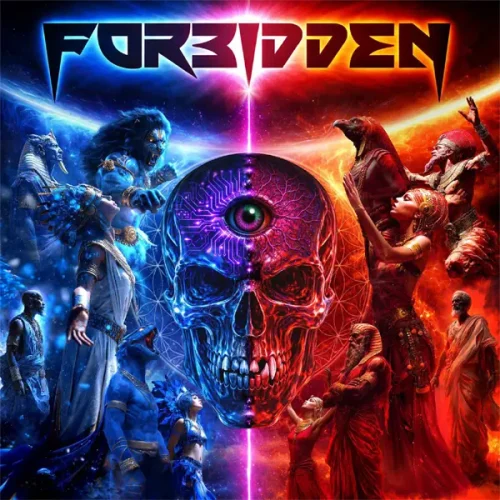
Forbidden – “Forbidden” (2026)
BLKIIBLK
#ThrashMetal #HeavyMetal
Para fãs de: Anthrax, Death Angel, Heathen, Testament
Texto por: Johnny Z. (English version above)
Nota: 8,5
Existem bandas que simplesmente retornam. Outras voltam carregando consigo uma expectativa gigantesca. No caso do Forbidden, a segunda situação é a que melhor define o momento atual. Desde o retorno da banda em 2023, a ansiedade por material novo era enorme. Afinal, estamos falando de uma das formações mais importantes, técnicas e subestimadas da história do thrash metal da Bay Area.
Depois de Omega Wave (2010), seu último álbum de estúdio até então, foram nada menos que 15 anos até que o grupo apresentasse uma nova composição. “Divided By Zero”, lançada como single em 2025, funcionou como o primeiro sinal concreto de que o agora recarregado e reformulado quinteto não havia retornado apenas para viver de nostalgia.
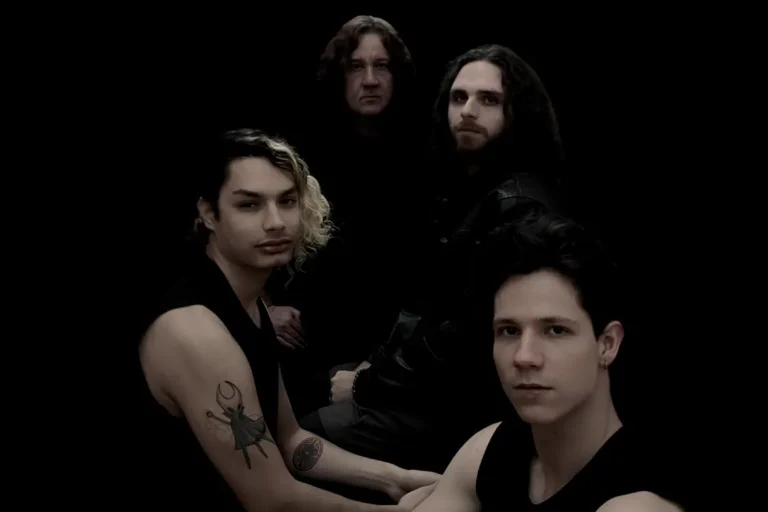
Agora, com Forbidden, Craig Locicero (guitarra) e Matt Camacho (baixo), únicos membros da formação clássica, juntos a Chris Kontos (bateria, ex-Machine Head), Norman Skinner (vocal, Skinner, ex-Niviane e ex-Imagika) e Jeremy Von Epp (guitarra), finalmente entregam a resposta para uma pergunta que permaneceu durante anos: ainda havia espaço para o Forbidden criar algo realmente relevante depois da primeira tentativa de retorno em 2008?
A resposta é um sonoro e contundente SIM”
Desde os primeiros segundos de “Single Point Failure”, fica evidente que a banda não está tentando reproduzir artificialmente o passado. O peso cortante está lá. Os solos monstruosos e a precisão também. Porém, existe uma ambição composicional maior, mesmo quando a banda caminha por territórios já conhecidos. Com o restante do álbum, fica claro que o grupo conhece profundamente suas próprias raízes, mas não parece disposto a ficar preso a elas.
É justamente essa combinação que torna o álbum tão interessante.
O início e o refrão de “Burning The Lungs of Earth” podem soar estranhos aos ouvidos dos fãs mais enraizados no thrash logo na primeira audição, mas, depois, tudo se amplia em uma atmosfera apocalíptica, colocando a agressividade do thrash mais clássico em contato com construções elaboradas. Destaque para as camadas vocais de Norman, que mesclam vários timbres com uma facilidade espantosa. Algo que o Forbidden sempre teve presente em sua carreira, mas que agora soa ainda mais agressivo.
A cacetada “Divided By Zero”, já conhecida pelo público, funciona perfeitamente dentro do contexto do disco. A faixa reafirma que esse novo recomeço não foi um evento isolado, mas parte de uma nova fase criativa. Ao meu ver, ela mostra um claro reencontro com a identidade clássica do Forbidden, combinando guitarras agressivas, dinâmica tipicamente Bay Area e aquela tensão que sempre diferenciou a banda dentro do thrash metal. Há, inclusive, uma clara conexão com a energia de Forbidden Evil (1988), mas sem transformar essa referência em mera nostalgia. Depois de tantos anos sem material inédito, “Divided By Zero” soou como uma declaração de princípios: o Forbidden resgata sua assinatura sonora, mantém a velocidade e a ferocidade intactas e demonstra que ainda possui combustível criativo para olhar adiante.
Em “DCLXVI”, temos um início em calmaria, mas, após alguns segundos, tudo vai a outro patamar, com uma tensão elevadíssima. Os famosos riffs cavalgados de Craig dão o ar da graça em uma faixa sinistra, brutal e feita para bater cabeça com os punhos enrijecidos. Cadenciada, porém extremamente pesada, é daquelas que fazem os amantes dos “can can can can” felizes (risos). Por mais que todos os membros se destaquem ao longo do álbum, o coletivo aqui é o grande vencedor. Nota-se uma coesão e uma química incríveis entre todos.
“Psyclops”, com sua introdução de baixo exuberante, surge como um dos grandes destaques. A música é um verdadeiro rolo compressor rítmico, construída sobre uma estrutura pesada e hipnótica, com riffs extremamente encorpados e técnicos de Craig e uma bateria que mantém a tensão em alta. As estruturas vocais de Norman, por sua vez, cortam como uma lâmina logo na primeira audição, reforçando o caráter sombrio e ameaçador da faixa. Em vez de apostar apenas na velocidade, o Forbidden explora peso, cadência e dinâmica, mostrando que sua agressividade também pode ser construída na contenção. O resultado é uma faixa esmagadora e, ao mesmo tempo, absolutamente fiel à identidade da banda.
A bateria trabalha com precisão cirúrgica — falando em Chris Kontos, é até redundância, pois o cara é uma máquina —, enquanto Norman Skinner acrescenta personalidade própria à formação atual, equilibrando técnica, alcance, agressividade e melodia, como Russ Anderson fazia nos primórdios da banda. Como Craig fez questão de dizer no último show em São Paulo: “Norman é o cara certo para a banda e o próprio Russ Anderson foi um dos que abençoou sua voz para continuar o nosso legado.”
O ponto menos expressivo do álbum fica por conta de “Jisei”, uma faixa que se distancia consideravelmente da intensidade apresentada até aqui. Ao longo de pouco mais de três minutos e meio, a música aposta em uma atmosfera mais contemplativa e progressiva, sustentada por ambiências, vocais de Norman e discretas percussões, praticamente sem a presença das guitarras. Não se trata, evidentemente, de uma faixa ruim; pelo contrário, ela evidencia a versatilidade da banda, especialmente de Norman, que se destaca mesmo em uma abordagem mais delicada e cristalina. No entanto, dentro da dinâmica do álbum, sua proposta acaba funcionando como uma pausa bastante acentuada.
“Mutually Assured Dysfunction” chega como uma verdadeira marretada e reforça a faceta mais agressiva deste novo Forbidden. A faixa retoma os eixos do caos e da tensão, com riffs afiados, peso considerável e uma cozinha que mantém tudo em constante movimento. Ao mesmo tempo, demonstra que o grupo ainda sabe construir composições complexas sem transformar técnica em exibicionismo vazio. O conteúdo lírico, marcado por críticas à polarização, aos discursos vazios e à hipocrisia, completa uma faixa vigorosa, pesada e urgente.
Um dos momentos mais curiosos é “Sycophantasy”, que conta com a participação especial de Brann Dailor, baterista do Mastodon, nos vocais, criando um dueto incrível com Norman. A presença do músico acrescenta uma camada diferente ao álbum, mas não soa como um recurso utilizado apenas para chamar atenção. A colaboração está integrada à proposta musical e reforça a dimensão mais experimental do trabalho. Puro suco do caos, a faixa nos remete muito ao poder e à vibe de Twisted Into Form. É um dos momentos mais interessantes do álbum, com estrutura, levadas, riffs cativantes e um refrão que conversa diretamente com o legado do Forbidden.
“The Burden” segue machucando sem dó, mais veloz e direta, com belíssimo trabalho de guitarra e um refrão eficiente. Aqui, o Forbidden prioriza impacto, peso e agressividade, sem recorrer a demonstrações técnicas gratuitas.
“Sol Grave” mantém o disco em movimento, trazendo sonoridades e climas que remetem à fase mais experimental da banda em Distortion (1994), com algumas orquestrações de fundo, mas respirando ares mais atuais de Omega Wave, além de belas camadas vocais. É uma ótima faixa, embora não cause o mesmo impacto de outros momentos do álbum.
“Flower of Life (Chaos By Design)” encerra a jornada com impressionantes nove minutos de uma composição intrincada que beira o épico caótico dentro do thrash metal contemporâneo. Soando ora experimental, ora puramente agressiva, apresenta inúmeras variações de andamento e melodias trabalhadas com um nível de sofisticação raro dentro do gênero. A belíssima passagem de piano conduz a música para uma parte final simplesmente arrepiante. Em termos de estrutura e composição, o Forbidden aqui se supera. É uma conclusão grandiosa para um álbum que não teve medo de explorar diferentes possibilidades dentro de sua própria identidade.
Se Forbidden Evil (1988) apresentou uma banda jovem, faminta e tecnicamente impressionante, enquanto Twisted Into Form (1990) representou um salto gigantesco em maturidade e composição, o novo Forbidden funciona como uma síntese dessa trajetória. Não é uma tentativa de competir com o passado, mas uma evolução construída a partir dele.
Outro mérito está na produção de Craig Locicero, Chris Kontos e Zach Ohren, que entrega uma sonoridade moderna e poderosa sem eliminar a agressividade orgânica que sempre foi essencial ao Forbidden.
A sequência de Forbidden Evil, Twisted Into Form, Distortion (1994) e Green (1997) consolidou uma identidade baseada em precisão técnica, riffs complexos e melodias marcantes. Após o retorno aos palcos, a banda começou a reconstruir essa identidade. O resultado está agora em Forbidden.
Seu grande mérito é justamente o equilíbrio. O Forbidden não tenta soar como uma banda de 1988 gravando em 2026, mas também não abandona suas raízes. Utiliza décadas de experiência para ampliar sua própria linguagem.
O álbum possui energia, peso, técnica, melodias e, acima de tudo, propósito. Forbidden representa uma nova reinvenção e tenho certeza que dessa vez só teremos ótimos frutos (e chega de pausas, né?) Para quem esperou desde Omega Wave, a espera foi longa demais!
Agora, finalmente, temos um novo álbum completo. E ele não decepciona. As melhores faixas para mim são: “DCLXVI”, “Psyclops”, “Sycophantasy”, “Mutually Assured Dysfunction” e “Flower of Life (Chaos By Design)”, daquelas de se juntarem aos grandes clássicos do grupo!
Forbidden não apenas revisita seu legado. Ele acrescenta um novo capítulo a ele. Uma obra poderosa, ambiciosa, técnica e surpreendentemente atual. O Forbidden voltou. E voltou com fome!
ENGLISH:
Some bands simply return. Others come back carrying enormous expectations on their shoulders. In Forbidden’s case, the latter best describes the band’s current situation. Since the band’s return in 2023, anticipation for new material has been enormous. After all, we are talking about one of the most important, technically accomplished and underrated bands in the history of Bay Area thrash metal.
After Omega Wave (2010), their last studio album at the time, no less than 15 years passed before the band finally presented new material. “Divided By Zero”, released as a single in 2025, was the first concrete sign that the now revitalised and reshaped quintet had not returned simply to live off nostalgia.
Now, with Forbidden, Craig Locicero (guitar) and Matt Camacho (bass), the only members of the classic line-up, are joined by Chris Kontos (drums, ex-Machine Head), Norman Skinner (vocals, Skinner, ex-Niviane and ex-Imagika) and Jeremy Von Epp (guitar). Together, they finally provide the answer to a question that had lingered for years: was there still room for Forbidden to create something genuinely relevant after their first comeback attempt in 2008?
The answer is a resounding and emphatic YES.
From the very first seconds of “Single Point Failure”, it becomes clear that the band is not trying to artificially recreate the past. The razor-sharp heaviness is still there. So are the monstrous solos and the precision. However, there is a greater compositional ambition at work, even when the band ventures into territory it has explored before. As the rest of the album unfolds, it becomes clear that the group knows its own roots inside out, but has no intention of becoming trapped by them.
That is precisely what makes the album so interesting.
The opening and chorus of “Burning The Lungs of Earth” may sound unusual to more deeply rooted thrash fans on the first listen, but things soon expand into an apocalyptic atmosphere, bringing the aggression of classic thrash into contact with more elaborate arrangements. Norman’s vocal layers deserve particular mention, blending several different tones with astonishing ease. It is something Forbidden have always incorporated into their career, but here it sounds even more aggressive.
The already familiar “Divided By Zero” fits perfectly within the context of the album. The track reinforces the idea that this new beginning was not an isolated event, but part of a new creative phase. In my view, it represents a clear reconnection with Forbidden’s classic identity, combining aggressive guitars, unmistakable Bay Area dynamics and that sense of tension that has always set the band apart within thrash metal.
There is, in fact, a clear connection to the energy of Forbidden Evil (1988), but without turning that reference into mere nostalgia. After so many years without new material, “Divided By Zero” sounded like a statement of principles: Forbidden are reclaiming their sonic signature, keeping their speed and ferocity completely intact while proving that they still have enough creative fuel to look ahead.
“DCLXVI” begins in relative calm, but after a few seconds everything moves to another level, with the tension rising dramatically. Craig’s famous galloping riffs make their presence felt in a sinister, brutal track seemingly made for headbanging with clenched fists. Measured yet extremely heavy, it is exactly the kind of song that will make lovers of those classic “can-can-can-can” rhythms very happy. (Laughs.)
As much as every member stands out throughout the album, the collective is the real winner here. There is an incredible sense of cohesion and chemistry between all five musicians.
“Psyclops”, with its exuberant bass introduction, emerges as one of the album’s major highlights. The song is a genuine rhythmic steamroller, built around a heavy and hypnotic structure, with Craig delivering extremely thick and technical riffs while the drums keep the tension permanently elevated.
Norman’s vocal arrangements, meanwhile, cut like a blade from the very first listen, reinforcing the track’s dark and threatening character. Rather than relying solely on speed, Forbidden explore weight, groove and dynamics, showing that their aggression can also be built through restraint. The result is a crushing track that remains, at the same time, absolutely faithful to the band’s identity.
The drumming works with surgical precision — and when it comes to Chris Kontos, saying that is almost redundant, because the guy is a machine — while Norman Skinner adds a personality of his own to the current line-up, balancing technique, range, aggression and melody in much the same way Russ Anderson did during the band’s early years.
As Craig made a point of saying at Forbidden’s most recent show in São Paulo: “Norman is the right guy for the band, and Russ Anderson himself was one of the people who blessed his voice to continue our legacy.”
The album’s least expressive moment comes with “Jisei”, a track that moves considerably away from the intensity established up to this point. Running for just over three and a half minutes, the song embraces a more contemplative and progressive atmosphere, sustained by ambience, Norman’s vocals and subtle percussion, with virtually no guitars present.
That certainly does not make it a bad song. On the contrary, it highlights the band’s versatility, particularly Norman’s, as he stands out even within a more delicate and crystalline approach. However, within the album’s overall dynamics, its concept ultimately works as a rather pronounced pause.
“Mutually Assured Dysfunction” arrives like a genuine sledgehammer and reinforces the more aggressive side of this new Forbidden. The track returns to the axes of chaos and tension, with razor-sharp riffs, considerable weight and a rhythm section that keeps everything in constant motion.
At the same time, it demonstrates that the band still knows how to construct complex compositions without turning technicality into empty showmanship. Its lyrical content, marked by criticism of polarisation, hollow rhetoric and hypocrisy, completes a vigorous, heavy and urgent track.
One of the album’s most curious moments is “Sycophantasy”, which features Mastodon drummer Brann Dailor on vocals, creating an incredible duet with Norman. The musician’s presence adds a different layer to the album, but it never feels like a device used simply to attract attention. The collaboration is fully integrated into the musical concept and reinforces the more experimental dimension of the record.
Pure chaos in its finest form, the track strongly recalls the power and vibe of Twisted Into Form. It is one of the album’s most interesting moments, with its structure, grooves, captivating riffs and a chorus that speaks directly to Forbidden’s legacy.
“The Burden” keeps hurting without mercy, faster and more direct, with beautiful guitar work and an effective chorus. Here, Forbidden prioritise impact, weight and aggression without resorting to gratuitous displays of technical ability.
“Sol Grave” keeps the album moving, bringing sounds and atmospheres that recall the band’s more experimental period on Distortion (1994), including some orchestration in the background, while also breathing the more contemporary air of Omega Wave, alongside beautiful vocal layers.
It is a great track, although it does not have quite the same impact as some of the album’s other moments.
“Flower of Life (Chaos By Design)” closes the journey with an impressive nine-minute composition that borders on chaotic epic territory within contemporary thrash metal. At times experimental and at others purely aggressive, it features countless tempo variations and melodies developed with a level of sophistication that is rare within the genre.
The beautiful piano passage leads the song into a simply breathtaking final section. In terms of structure and composition, Forbidden surpass themselves here. It is a grand conclusion to an album that was never afraid to explore different possibilities within its own identity.
If Forbidden Evil (1988) presented a young, hungry and technically impressive band, while Twisted Into Form (1990) represented a gigantic leap in maturity and songwriting, the new Forbidden works as a synthesis of that journey.
It is not an attempt to compete with the past, but an evolution built upon it.
Another achievement lies in the production by Craig Locicero, Chris Kontos and Zach Ohren, which delivers a modern and powerful sound without removing the organic aggression that has always been essential to Forbidden.
The sequence of Forbidden Evil, Twisted Into Form, Distortion (1994) and Green (1997) consolidated an identity based on technical precision, complex riffs and striking melodies. Following their return to the stage, the band began rebuilding that identity. The result can now be heard on Forbidden.
Its greatest strength is precisely that balance. Forbidden are not trying to sound like a band from 1988 recording an album in 2026, but they have not abandoned their roots either. Instead, they are using decades of experience to expand their own musical language.
The album has energy, weight, technique, melodies and, above all, purpose. Forbidden represents a new reinvention, and I am certain that this time we will see nothing but great things come from it — and enough with the long breaks, right?
For those who have been waiting since Omega Wave, the wait has been far too long!
Now, finally, we have a new full-length album. And it does not disappoint. My personal picks are “DCLXVI”, “Psyclops”, “Sycophantasy”, “Mutually Assured Dysfunction” and “Flower of Life (Chaos By Design)” — the kind of tracks that could join the band’s great classics.
Forbidden does not merely revisit its legacy. It adds a new chapter to it. A powerful, ambitious, technical and surprisingly contemporary work. Forbidden are back. And they are back hungry!